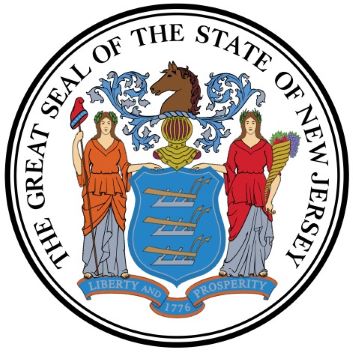
Now that 2026 is officially underway, it is time to celebrate our nation’s 250th anniversary. And there is nowhere better to experience that history than New Jersey!
The unanimous Declaration of the thirteen united States of America, When in the Course of human events, it becomes necessary for one people to dissolve the political bands which have connected them with another, and to assume among the powers of the earth, the separate and equal station to which the Laws of Nature and of Nature’s God entitle them, a decent respect to the opinions of mankind requires that they should declare the causes which impel them to the separation. ~Congress, July 4, 1776
New Jersey has been known unofficially known as the “Crossroads of the American Revolution.” Over 600 land and naval battles and skirmishes took place in our beloved state and you can visit over 150 unique locations.
In fourth grade, we spent the entire school year learning New Jersey history. I can’t tell you much about what I learned in elementary school, but that year of history made a serious impression on me. We learned about Molly Pitcher’s heroic efforts at The Battle of Monmouth. I even created a diorama of the event. It wasn’t until much later I learned her real name was Mary Ludwig Hays, a 23-year-old wife of William Hays, a member of the 4th Continental Artillery and George Washington’s Main Army.
You can find Revolutionary War locations and monuments in every corner of New Jersey. I even remember seeing the “Washington’s Trail” signs in the Valley section of my beloved Belleville. A favorite spot of mine is Morristown National Historic Park. Washington’s Continental Army spent several winters in Morristown, one of which was among the coldest on record. The winter of 1779-1780 is known as “Where America Survived.” When the Continental Army first arrived in Morristown, there was already over one foot of snow on the ground. Over the winter, they endured 20 major snowstorms. According to writings from New York Justice, Thomas Jones, “The winter of 1779 was the severest ever known in the middle colonies. It may not be amiss to take some notice of it. The snow began to fall about the 10th of November, and continued almost every day till the middle of the ensuing March. In the woods it lay at least four feet upon a level.”
Another favorite is Batsto Village in Wharton State Forest. What began as an iron works by Charles Read along the Batsto River in 1766, the village played key roles throughout America’s history. During the Revolutionary War years, Batsto went from manufacturing pots and kettles, to supplies for the Continental Army. Private citizens lived in the Village’s buildings until the last homeowner left in 1989. It now is a recognized New Jersey Historic site, and is listed on the New Jersey and National Register of Historic Places.
These two locations are just an example of the multitude of opportunities to learn about the key role New Jersey played in the development of this nation. There are several sites that provide the history of New Jersey, like Revolutionary New Jersey, Journey through Jersey, and Visit NJ 250. There are also independent bloggers, like me, that just love our state and want to share all the good it has to offer. I often say we get a flack, but we know better. It’s what gives us our Jersey swagger. And I am convinced part of that swagger comes directly from those who helped form our state and our nation.

 This Is My New Jersey
Leave a comment